



Semaglutide has rapidly become one of the most talked-about medicines for weight loss. With celebrity transformations, social media success stories and increasing availability in India, interest in this once-weekly injection has grown tremendously. At the same time, it has also created confusion. Is it really a “miracle drug”? Who should take it? How much weight can it help you lose? Is it safe? And how does it compare with the newer medicine, Tirzepatide?
In this article, we’ll separate facts from hype and explain where Semaglutide fits in modern obesity treatment, who is most likely to benefit from it, what results are realistic, and what practical factors you should consider before starting treatment. If you are already taking Semaglutide, we have also prepared detailed patient information guides in English and Hindi that answer the day-to-day questions patients commonly ask during consultations.
What is Semaglutide?
Semaglutide belongs to a group of medicines called GLP-1 receptor agonists. It was originally developed for the treatment of type 2 diabetes, but doctors soon observed that patients receiving the medicine also experienced significant weight loss. Further research confirmed that, when used at appropriate doses along with lifestyle modification, Semaglutide could help many people achieve clinically meaningful and sustained weight reduction. Today, it is approved in many countries for both type 2 diabetes and chronic weight management in appropriately selected patients.
Unlike many older weight-loss medicines, Semaglutide works by mimicking a naturally occurring hormone called GLP-1 (Glucagon-Like Peptide-1). This hormone is released after meals and helps regulate appetite, increases the feeling of fullness and slows the rate at which food leaves the stomach. Most patients simply notice that they feel satisfied with much smaller meals and are less likely to keep thinking about food throughout the day.
It is important to understand that Semaglutide is not a cosmetic weight-loss injection. It is a prescription medicine used to treat a chronic medical condition, and like any other treatment, it works best when prescribed to the right patient after an appropriate medical assessment.
Why Has Semaglutide Become So Popular?
Obesity has become one of the fastest growing health problems worldwide and is closely linked to type 2 diabetes, high blood pressure, fatty liver disease, sleep apnoea, heart disease and several types of cancer. While healthy eating and regular exercise remain the foundation of weight management, many people find that long-term weight loss is far more difficult than simply following a diet.
This is because body weight is regulated by complex biological mechanisms. After losing weight, the body often responds by increasing hunger, reducing feelings of fullness and lowering energy expenditure, making it easier to regain the lost weight. This explains why many people repeatedly lose weight only to gain it back despite sincere efforts.
Semaglutide has changed the way doctors approach obesity because it addresses one of the most important biological drivers of weight regain—persistent hunger. Instead of relying entirely on willpower, patients often find that portion control becomes much easier because they naturally feel full after eating smaller quantities of food. This has made Semaglutide one of the most effective medical treatments currently available for obesity.
Who Should Consider Semaglutide?
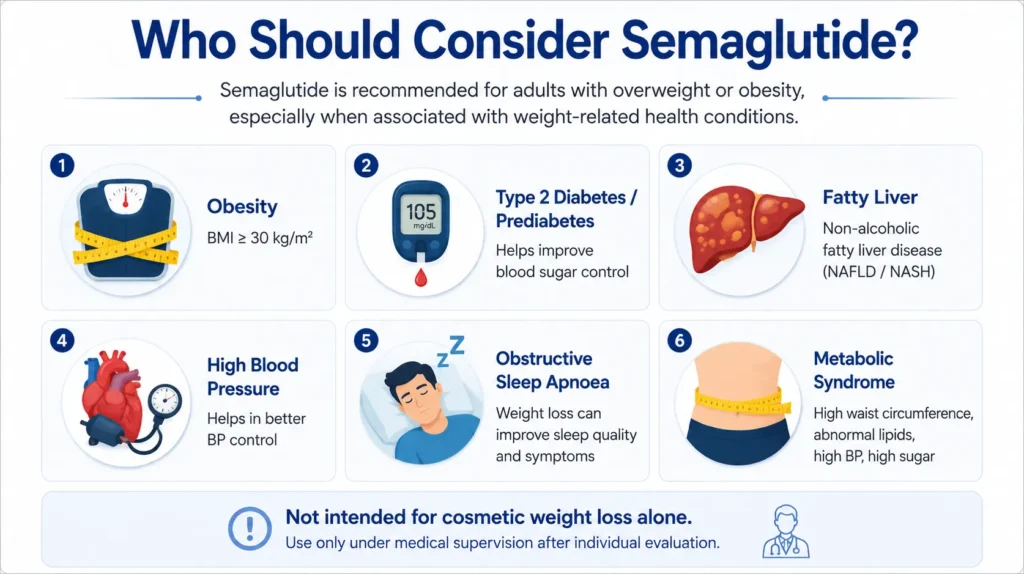
Semaglutide is not intended for everyone who wants to lose a few kilograms before a holiday or a family function. The people who benefit the most are usually those whose excess weight is already affecting their health or significantly increasing their future health risks.
Your doctor may consider Semaglutide if you have:
- Obesity (BMI ≥30 kg/m²)
- Overweight (BMI ≥27 kg/m²) along with obesity-related conditions such as type 2 diabetes, prediabetes, high blood pressure, abnormal cholesterol, fatty liver disease or obstructive sleep apnoea
- Progressive weight gain despite sincere efforts with diet and exercise
- Difficulty controlling appetite or portion sizes despite lifestyle modification
- Increasing waist circumference, especially if associated with metabolic syndrome
- Weight-related problems such as knee pain, reduced mobility or breathlessness on exertion
For many patients, the benefits extend well beyond weight loss. Even a 5–10% reduction in body weight can improve blood sugar control, blood pressure, fatty liver disease and overall metabolic health. Larger reductions may further reduce cardiovascular risk and improve mobility, sleep and quality of life.
The decision to start Semaglutide should always be individualized. Your doctor will consider factors such as your BMI, waist circumference, associated medical conditions, previous weight-loss attempts, current medications and long-term treatment goals before recommending it.
Who Probably Does Not Need Semaglutide?
Not every person who wishes to lose weight requires medication.
If you are only a few kilograms above your ideal weight, have no obesity-related health problems and are able to lose weight through sustainable dietary changes and regular physical activity, lifestyle modification alone is usually the preferred approach.
Similarly, Semaglutide should never be viewed as a shortcut for rapid cosmetic weight loss. It is a medical treatment intended for patients in whom the expected health benefits clearly outweigh the potential risks and costs.
What Results Can You Realistically Expect?
One of the first questions patients ask is, “How much weight will I lose?”
The honest answer is that no doctor can predict this accurately for an individual patient. Weight loss depends on several factors, including your starting weight, eating habits, physical activity, associated medical conditions, the dose you are able to tolerate and your body’s individual response to treatment.
Large clinical studies have shown that patients receiving Semaglutide together with lifestyle modification lose an average of around 10–15% of their starting body weight, although some people lose considerably more and others less. More importantly, weight loss usually occurs gradually over many months rather than a few weeks.
It is also important not to judge success solely by the weighing scale. Doctors also look for improvements in waist circumference, blood sugar control, blood pressure, fatty liver disease, physical fitness and overall quality of life. In many patients, these improvements begin even before dramatic weight loss becomes obvious.
The Biggest Mistake Patients Make
One of the commonest mistakes is expecting rapid weight loss after the first few injections. Semaglutide is introduced gradually to allow the body to adjust and to minimize digestive side effects. Meaningful weight loss develops over months, not weeks.
The second mistake is eating far too little because hunger has reduced. While the medicine helps you eat smaller portions, it should not lead to starvation. Your meals should continue to provide adequate protein, vegetables, fruits and other essential nutrients. The goal is to lose excess body fat while preserving muscle mass, strength and overall health.
Patients should also avoid comparing their progress with friends or social media influencers. Every individual’s response to treatment is different, and comparing results often creates unrealistic expectations and unnecessary disappointment.
What Happens When Weight Loss Stops?
Almost every patient eventually reaches a stage where weight loss slows or temporarily stops. This is commonly known as a weight-loss plateau and is a normal part of the journey.
A plateau does not necessarily mean that the medicine has stopped working. If your appetite remains under better control than before, your waist circumference is improving and you are maintaining a significantly lower weight than you previously carried, the treatment is still providing important health benefits.
This is also not the time to increase your dose without medical advice. Long-term success depends much more on consistency than on chasing rapid weight loss.
Semaglutide vs Mounjaro (Tirzepatide): Which One Should You Choose?
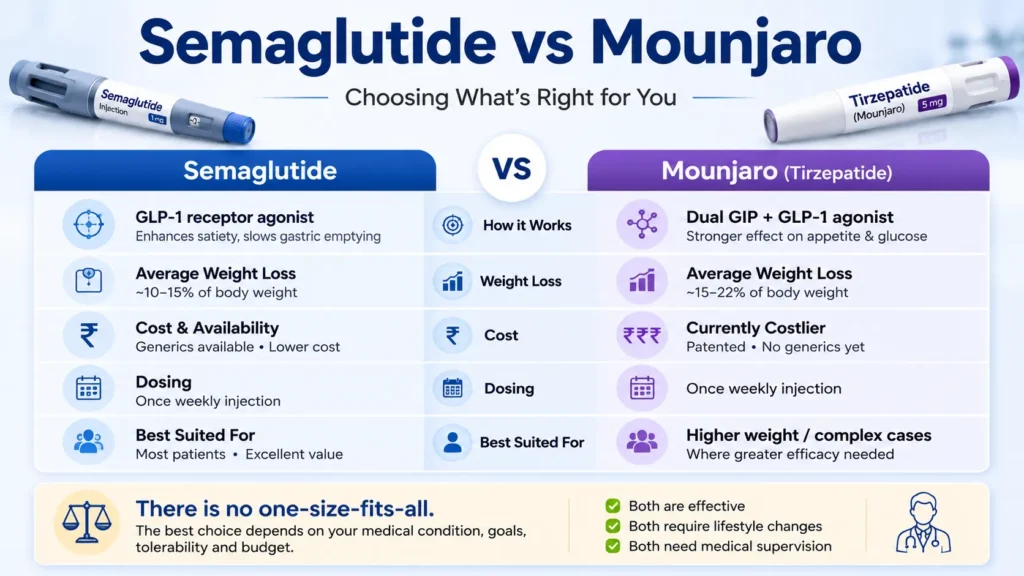
As more patients become aware of newer weight-loss medicines, one of the commonest questions we hear is whether they should choose Semaglutide or Mounjaro® (tirzepatide). The simple answer is that there is no single “best” medicine for everyone.
Clinical studies have shown that Mounjaro generally produces greater average weight loss than Semaglutide, making it an attractive option for patients with severe obesity or those aiming for more aggressive weight reduction. However, effectiveness is only one part of the decision. Doctors also consider your medical conditions, expected weight-loss target, side effects, affordability and the likelihood that treatment can be continued over the long term.
One of the biggest developments in India has been the expiry of the Semaglutide patent, allowing several Indian pharmaceutical companies to introduce high-quality generic versions at substantially lower prices. Depending on the brand and dose, generic Semaglutide treatment may now cost approximately ₹1,300–4,000 per month, whereas Mounjaro treatment typically costs around ₹14,000–26,000 per month, depending on the dose used.
For many Indian families, this difference is significant. A treatment that provides excellent weight loss and remains affordable for many months or even years is often more valuable than a slightly more effective medicine that becomes financially difficult to continue. For patients aiming for around 10–15% weight loss, Semaglutide now offers an outstanding balance of effectiveness, safety and affordability. Patients with severe obesity or much larger weight-loss goals may benefit more from Mounjaro if cost is not a major concern.
Rather than asking which medicine is better, it is more useful to ask which medicine is better suited to your individual health goals and circumstances.
Is Semaglutide Difficult to Take?
Many patients imagine that starting Semaglutide means learning complicated injection techniques or taking injections every day.
Fortunately, that is not the case. Semaglutide is administered as a simple once-weekly injection just under the skin of the abdomen, thigh or upper arm using a prefilled pen or syringe with a very fine needle. The technique is similar to that used by many people who take insulin. Most patients become comfortable giving the injection themselves after a single demonstration, and the entire process usually takes less than a minute.
Because it is taken only once a week, many people find it much easier to incorporate into their routine than medicines that require daily dosing.
How Long Will You Need to Take Semaglutide?
This is perhaps the most important question after “How much weight will I lose?”
Unlike antibiotics, Semaglutide does not have a fixed treatment course of three or six months. Obesity is a chronic medical condition, and just like diabetes or high blood pressure, treatment sometimes needs to continue for as long as it is providing meaningful benefit.
This does not mean that everyone needs to remain on Semaglutide for life. Some patients are able to discontinue treatment successfully after achieving and maintaining their target weight, while others require longer-term therapy because appetite returns and weight begins to increase after stopping the medicine.
The objective should not simply be to reach a target number on the weighing scale. The equally important challenge is maintaining that healthier weight over the years. The duration of treatment should therefore be individualized after reviewing your weight trend, appetite, lifestyle, metabolic health and treatment goals.
Should You Be Worried About Side Effects?
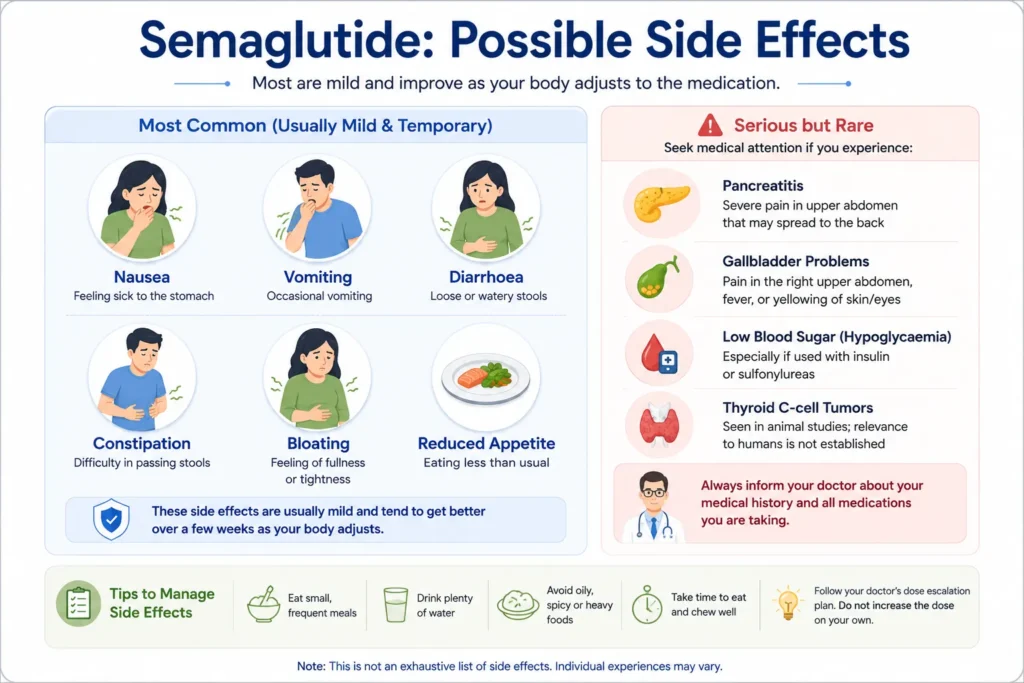
One of the biggest reasons patients hesitate to start Semaglutide is because of alarming stories circulating on social media. Like every effective medicine, Semaglutide can cause side effects. Fortunately, the majority are mild, temporary and manageable.
The commonest side effects include nausea, reduced appetite, early fullness, constipation, loose stools and occasional vomiting. These symptoms are usually most noticeable during the first few weeks or after increasing the dose and often improve as the body adjusts.
Serious side effects such as pancreatitis, gallbladder disease or severe allergic reactions are uncommon. Patients should be aware of the warning symptoms, but it is equally important not to let rare complications create unnecessary fear. Millions of people worldwide have benefited from Semaglutide, and for appropriately selected patients the benefits usually outweigh the risks.
Rather than discussing every possible side effect in detail here, we have prepared comprehensive English and Hindi patient information guides that explain common side effects, warning symptoms and practical ways to minimise them.
Semaglutide Is Only One Part of the Treatment
It is tempting to think that Semaglutide alone causes weight loss. In reality, the medicine simply makes healthy habits much easier to follow.
Patients who achieve the best long-term results usually combine the medicine with balanced nutrition, adequate protein intake, regular physical activity and strength training to preserve muscle mass while losing fat. Regular follow-up appointments also allow treatment to be adjusted according to progress and help patients maintain motivation during the inevitable periods when weight loss slows.
Think of Semaglutide as a powerful tool—not a replacement for a healthy lifestyle.
Looking for Practical Guidance?
This article is intended to help you understand whether Semaglutide is the right treatment for you.
If you have already started treatment or are considering starting, you are likely to have many practical questions that are difficult to answer in a single blog article. We have therefore prepared detailed patient guides in both English and Hindi that cover:
- Expected weight loss
- Common side effects
- Diet and protein intake
- Exercise recommendations
- Injection technique
- Missed doses
- Treatment duration
- Frequently asked questions
👉 Read our English Semaglutide Patient Guide
👉 हिन्दी सेमाग्लूटाइड रोगी मार्गदर्शिका पढ़ें
Key Takeaways
1. Semaglutide is one of the most effective medicines currently available for the treatment of obesity and works by reducing appetite and increasing the feeling of fullness.
2. It is most suitable for people with obesity or overweight associated with medical conditions such as diabetes, fatty liver disease, hypertension or sleep apnoea, rather than those seeking cosmetic weight loss.
3. Most patients can realistically expect gradual weight loss over several months, with average reductions of around 10–15% of starting body weight when combined with healthy lifestyle changes.
4. Weight loss is only one measure of success. Improvements in waist circumference, blood sugar, blood pressure, fatty liver disease and overall quality of life are equally important.
5. Although Mounjaro® (tirzepatide) generally produces greater average weight loss, generic Semaglutide has become substantially more affordable in India, making it an excellent long-term option for many patients.
6. Semaglutide is administered as a simple once-weekly self-injection using a fine needle, and most patients learn the technique after a single demonstration.
7. The medicine works best when combined with a balanced diet, adequate protein intake, regular physical activity and ongoing medical follow-up.
8. The duration of treatment varies from person to person and should be decided jointly with your doctor based on treatment response and long-term weight maintenance goals.
The Bottom Line
Semaglutide has transformed the medical treatment of obesity because it addresses one of the biggest barriers to successful weight loss—persistent hunger. It is neither a miracle cure nor a shortcut. Instead, it is a scientifically proven treatment that helps many people achieve meaningful and sustainable weight loss when combined with healthy eating, regular physical activity and ongoing medical supervision.
Perhaps the most important message is this:
Obesity is a chronic medical condition, not a failure of willpower. Seeking appropriate medical treatment for obesity is no different from seeking treatment for diabetes, high blood pressure or asthma.
For the right patient, Semaglutide can be a powerful tool—not only for losing weight, but for improving overall health, reducing future medical risks and enhancing quality of life.
Frequently Asked Questions (FAQs)
Who is an ideal candidate for Semaglutide?
Semaglutide is generally recommended for adults with obesity (BMI ≥30 kg/m²) or those who are overweight (BMI ≥27 kg/m²) with obesity-related conditions such as type 2 diabetes, prediabetes, high blood pressure, fatty liver disease, abnormal cholesterol or obstructive sleep apnoea. The decision should always be individualized after medical evaluation.
How much weight can I expect to lose with Semaglutide?
Clinical studies have shown an average weight loss of around 10–15% of starting body weight when Semaglutide is combined with lifestyle modification. Some people lose considerably more, while others lose less. The response varies from person to person.
How soon will I start losing weight?
Many patients notice reduced appetite within the first few weeks, but meaningful weight loss usually develops gradually over several months. Semaglutide is designed for steady, sustainable weight reduction rather than rapid weight loss.
Is Semaglutide better than Mounjaro® (tirzepatide)?
Mounjaro generally produces greater average weight loss in clinical trials. However, Semaglutide has become significantly more affordable in India following the availability of generic formulations. The best choice depends on your weight-loss goals, medical conditions, affordability and your doctor’s recommendation.
Will I need to take Semaglutide for life?
Not necessarily. There is no fixed duration of treatment. Some patients can stop treatment after achieving and maintaining their target weight, while others benefit from longer-term therapy. The decision should be based on your progress, weight maintenance and overall health.
Is Semaglutide safe?
For appropriately selected patients, Semaglutide has an excellent safety profile. The most common side effects are nausea, reduced appetite, constipation and occasional vomiting, which usually improve over time. Serious side effects are uncommon and can usually be recognized early if patients are aware of the warning symptoms.
Is the injection painful?
Semaglutide is given as a once-weekly self-injection using a very fine needle, similar to an insulin injection. Most patients find it much less uncomfortable than they expected and become confident administering it themselves after one or two supervised demonstrations.
Will I regain weight after stopping Semaglutide?
Weight regain is possible because appetite often increases once the medicine is discontinued. However, it does not mean that everyone regains all the lost weight. Patients who continue healthy eating habits, remain physically active and maintain regular follow-up have a better chance of sustaining their results.